Many B2B brands face an unspoken communication challenge: their products and services are complex, while their buyers are time-constrained, skeptical, and distracted across digital channels. Traditional static content, such as white papers and case studies, still has value but is less effective at capturing attention or conveying understanding at the pace required by enterprise buyers.
This is where motion graphics services have become a strategic asset rather than a creative add-on. Animation translates dense product features into clear visual narratives. Explainer videos compress a 20-minute conversation into a 90-second visual that a CMO can share with an entire buying committee. Corporate brand films build credibility at scale across markets where the brand cannot send a salesperson in person. For B2B brands navigating long sales cycles and technically dense subject matter, motion has moved from optional to essential.
At Proton Effect, our motion graphics practice is designed for enterprise brands in complex sectors. We deliver explainer videos, 2D and 3D animation, product demos, corporate brand films, and event media for clients in FMCG, industrial, financial services, and professional industries. This guide outlines the scope of motion services, their commercial value for B2B brands, and how to select the right partner for enterprise projects.
Key Takeaways
- Motion graphics services for B2B brands cover explainer videos, product demos, corporate brand films, 2D and 3D animation, and motion design for events and digital channels.
- B2B motion graphics require a distinct creative approach compared to social or DTC animation, due to differences in audience, sales cycles, and subject complexity.
- Strong motion design helps enterprise buyers understand complex products, compresses learning time across buying committees, and shortens enterprise sales cycles.
- The most common B2B use cases for motion graphics are product education, sales enablement, trade event activation, internal communication, and brand storytelling at scale.
- Enterprise motion graphics engagements typically range from $5,000 to $50,000 per project, depending on duration, complexity, and the number of variants required across markets.
What Motion Graphics Services Actually Cover for Enterprise B2B Brands
Motion graphics encompass a wider range of work than many buyers realize. For enterprise B2B brands, a comprehensive motion practice includes several disciplines, each supporting specific commercial objectives throughout the buyer journey.
Explainer Videos and Product Education
Explainer videos translate complex products, services, or processes into concise visual narratives that enterprise buyers can understand in under two minutes. For B2B brands with technical products, software platforms, or industrial solutions, explainer videos sit at the start of the buyer journey, helping prospects grasp product value. Leading production companies integrate explainer videos into broader content systems rather than treating them as standalone assets.
2D and 3D Animation
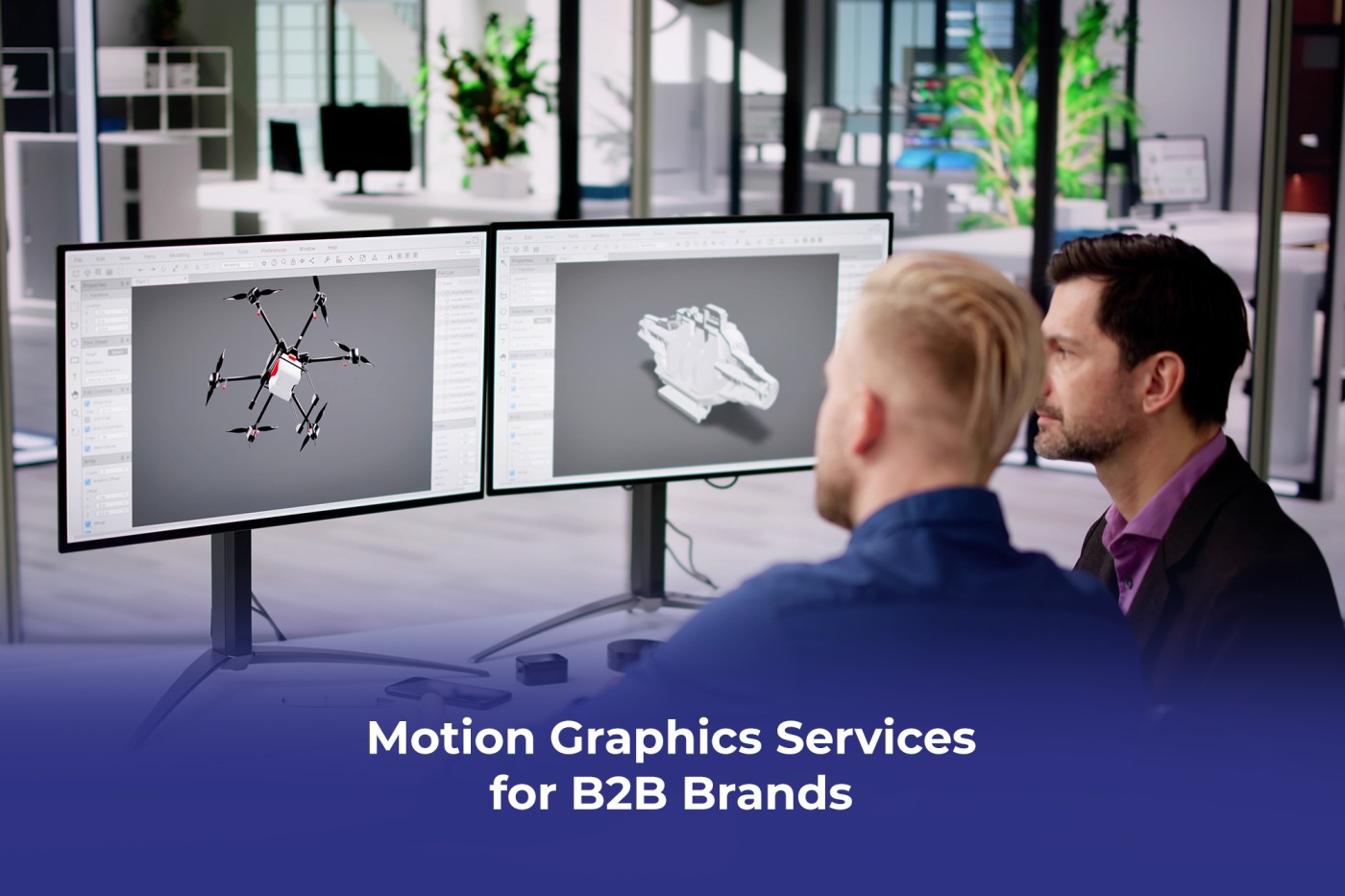
2D and 3D animation services allow B2B brands to visualize elements that cannot be photographed or filmed, such as product mechanics, process flows, data relationships, and abstract concepts. For industrial brands, 3D animation can replace costly product photography and demonstrate functionality beyond what static images can show.
Product Demos and Sales Enablement Motion
Sales enablement motion graphics include product walkthroughs, capability demonstrations, and interactive presentations that support enterprise sales conversations. These materials must balance visual storytelling with technical accuracy to address both senior decision makers and technical evaluators.
Corporate Brand Films
Corporate brand films convey a brand’s values, story, and market position through extended visual narratives. They are used on company websites, in investor materials, at trade events, and for recruitment. These productions combine video and motion graphics to deliver brand communication that static media cannot match.
Social Media and Event Motion
Motion graphics for social media and events serve different objectives than sales-focused content. Social motion attracts attention on platforms like LinkedIn and YouTube, while event motion enhances trade shows, summits, and conferences by creating atmosphere and reinforcing brand presence.
Why Motion Graphics Work So Well for B2B Brands with Complex Products
At this stage, motion design becomes a strategic tool rather than just an aesthetic choice. B2B brands face unique communication challenges, and motion design addresses these more effectively than other media.
Complex Ideas Compress into Visual Time
Reading dense product literature is time-consuming, while a well-designed 90-second motion graphic delivers information quickly and efficiently. For enterprise buyers, this time efficiency helps information move through buying committees. A two-minute explainer that most committee members understand is more effective than a lengthy technical document read only by specialists.
Visual Storytelling Builds Memory and Recall
Studies show that viewers retain more information from animated content than from static content covering the same materials. For B2B brands with long sales cycles, strong visual storytelling enhances brand recall throughout extended evaluation periods, outperforming white papers and slide decks.
Motion Design Scales Across Markets and Languages
Motion design scales efficiently for enterprise brands in multiple markets. High-quality animation can be localized, adapted for regional needs, and deployed across channels without redevelopment, making it valuable for multinational brands seeking consistent messaging worldwide.
Animated Motion Graphic Content Outperforms Static on Every Major Channel
Video and animated content consistently achieve higher engagement than static creative across LinkedIn, YouTube, paid social, programmatic display, and email. Wyzowl’s State of Video Marketing research shows most marketers find video increases user understanding, generates leads, and reduces support inquiries. For B2B brands, animation is now essential for standing out.
5 High-Impact Motion Graphics Use Cases for B2B Enterprise Companies
Motion graphics generate the greatest commercial returns when aligned with specific business challenges. The following five use cases consistently deliver measurable impact for enterprise B2B brands.
- Product launch communication: For new products, line extensions, or major feature releases, motion design is the primary tool for conveying what is new and why it matters. Launches often include a brand film, product demo animation, social motion assets, and sales enablement videos, ensuring consistent messaging across the organization.
- Technical product education: Buyers of complex industrial equipment, software, financial products, or technical services must understand product functionality before evaluating fit. Animation and motion graphics make this education scalable, with a single explainer video reaching more prospects in a month than a sales engineer could in a year.
- Sales enablement and decision committee content: Enterprise purchases involve stakeholders from procurement, finance, IT, and end-user roles, each with unique information needs. Motion graphics support these groups through modular content libraries tailored to different audiences within the buying committee.
- Trade event and partner conference activation: Trade events are key pipeline sources for B2B brands. Motion design for booth screens, backdrops, and digital signage transforms static branding into dynamic storytelling, capturing audience attention in competitive event spaces.
- Investor relations and corporate communication: For public companies and those preparing for capital events, motion design enhances investor communications, annual reports, and earnings content. Animated formats present financial performance and strategy in ways that engage institutional audiences more effectively than static documents.
How Proton Effect Approaches Motion Graphics for Enterprise Brands
We take a brand-led approach to motion graphics, setting us apart from typical animation studios. As a branding and digital transformation agency, we begin each motion project by asking what commercial objectives it must achieve and how it supports the brand’s identity and positioning.
Integrating brand strategy into motion design is especially important for enterprise B2B work. Enterprise buyers expect consistent brand touchpoints. Motion graphics that disregard brand standards or treat animation separately can create noticeable friction for buyers.
Discovery and Strategic Foundation
Each motion engagement starts with discovery to define the audience, commercial objectives, brand parameters, and production constraints. Skipping this step often results in work that looks polished but lacks commercial impact. A clear strategic brief guides the creative team and provides clients with a framework to evaluate concepts based on business outcomes.
Concept and Storyboard Development
Building on the strategic foundation, we develop concepts and storyboards that translate the brief into clear visual directions. We usually present two or three distinct creative approaches, offering clients meaningful choices for the project’s direction.
Production Across Formats
After selecting a direction, we manage the full motion design pipeline, including 2D and 3D animation, mixed media, motion graphics, visual storytelling, sound design, and final delivery. For enterprise brands, this often involves multiple aspect ratios, language versions, and length variations for different channels and funnel stages.
Brand Integrity Throughout
During production, the brand strategy framework established in discovery guides all creative decisions. Design elements such as color, typography, motion principles, and pacing are based on brand standards, ensuring the final work authentically represents the brand.
We have delivered motion design for explainer videos, product demos, corporate brand films, and large-scale event activations for enterprise clients in consumer goods, industrial distribution, and financial services. For more details, please review our case studies on the Proton Effect website.
Looking for a motion graphics partner with enterprise B2B expertise? Contact Proton Effect or visit our Motion Graphics Service Page.
Motion Graphics vs Animation vs Explainer Video: What B2B Buyers Need to Know
These terms are often used interchangeably, but they refer to different deliverables with distinct costs, timelines, and use cases. Understanding these differences helps enterprise buyers brief agencies effectively and evaluate proposals accurately.
Motion Graphics
Motion graphics refer to animated graphic design elements such as text, icons, logos, infographics, charts, and abstract shapes within a defined visual system. They rarely include character animation or narrative storytelling. Motion graphics are ideal for explaining concepts, presenting data, transitioning between ideas, and adding visual rhythm to longer videos. For enterprise brands, they often appear within larger video productions or as standalone short-form content for social and digital channels.
Animation
Animation is a broader discipline that includes 2D, 3D, character animation, cel animation, and motion graphics. Full animation services often involve character development, scene building, and long-form storytelling. For B2B brands, animation is used when projects require illustrated worlds, character-driven narratives, or advanced 3D product visualization beyond the scope of motion graphics.
Explainer Video
An explainer video is a specific deliverable that typically combines motion graphics, animation, voice-over, and sound design into a 60- to 180-second piece explaining a product or service. This format is widely recognized as a standard top-of-funnel asset in B2B marketing. Effective explainer videos condense lengthy sales conversations into content that buyers can absorb independently.
Most enterprise B2B projects incorporate elements from all three categories. For example, a corporate brand film may use character animation for storytelling, motion graphics for data visualization, and explainer video segments for product overviews. The best creative partners integrate these disciplines into a cohesive solution rather than treating them as separate services.
What Motion Graphics Services Cost for Enterprise B2B Work
Motion graphics costs vary widely based on duration, complexity, animation style, and the number of required variants. Knowing typical investment levels helps marketing leaders budget effectively and assess whether agency proposals offer real value or just low prices with limited strategic depth.
Typical Investment Ranges for B2B Motion Engagements
- Short form social motion or animated logos: 1,500 to 5,000 dollars per asset. Suitable for ongoing social content production, short-form ad creative, or animated brand mark applications.
- Standard explainer video production: $5,000 to $15,000 for a 60- to 90-second piece. Covers script, storyboard, motion design, voice over, sound design, and final delivery across standard formats.
- 3D product animation or technical demos: 10,000 to 30,000 dollars, depending on the complexity of the product and the level of technical accuracy required. 3D work consistently costs more than 2D work due to the modeling, lighting, and rendering requirements.
- Corporate brand films and integrated motion campaigns: 20,000 to 50,000 dollars or more. Covers longer-form work that combines live action, motion graphics, and animation into a single, coherent production.
- Ongoing motion design retainers: 5,000 to 15,000 dollars per month. Covers consistent monthly motion production across multiple formats and channels for brands that need motion design as an ongoing capability rather than a one-time project.
How to Evaluate Value Beyond Cost
Motion graphics costs should be assessed based on the commercial outcomes they deliver, not just asset duration or file volume. For example, a 60-second explainer supporting a $250,000 sales cycle provides a different value than one for a low-value transaction. Investment should reflect the commercial significance of the motion design.
Motion graphics have evolved from a creative add-on to a strategic communication tool for enterprise B2B brands. They translate complex offerings into visual narratives that accelerate decision-making, enhance recall, and scale across markets and languages. For brands selling sophisticated products, the focus is now on how to invest in motion design to strengthen the brand and achieve commercial goals.
Proton Effect combines brand strategy, motion design expertise, and enterprise delivery experience in a unified practice across the USA, UAE, and Pakistan. If your brand requires motion work that maintains brand integrity and delivers commercial impact, we invite you to connect with us.
Ready to discuss your motion graphics needs? Contact Proton Effect or visit our Motion Graphics Service Page.
Frequently Asked Questions
1. What does a motion graphics service include?
Motion design services cover the design and production of animated visual content for brands, businesses, and organizations. The work typically includes explainer videos, 2D and 3D animation, product demonstrations, corporate brand films, social media motion content, and event activation media. A motion graphics designer or studio brings together visual storytelling, illustration, animation, sound design, and final delivery across multiple formats to produce work that communicates ideas more effectively than static design can. For B2B brands, motion design has become a standard category of marketing investment because video content consistently outperforms static content across nearly every digital channel.
2. How long does a motion graphics project take?
A standard explainer video typically takes 4-8 weeks from the initial brief to final delivery. The timeline depends on the complexity of the visual style, the depth of strategic foundation required, the number of stakeholder review rounds, and whether the project includes custom sound design or voice-over recording. Simple animated logos and short social motion pieces often deliver within two to three weeks. Complex 3D product animations or corporate brand films can take 12 weeks or longer. Brands that plan the review and approval process before the engagement begins consistently see faster timelines than those that handle approvals reactively.
3. How are motion graphics different from regular video?
Regular video typically refers to live-action footage of real people, places, or products. Motion graphics refers to animated graphic design where text, icons, illustrations, and abstract visual elements move within a defined creative system. Many B2B marketing pieces combine both formats, using live action to capture human stories and motion graphics to visualize data, explain processes, or transition between scenes. The choice between live action, motion graphics, or a blend depends on what the content needs to communicate and which format produces the strongest emotional and informational impact for the target audience.
4. What kinds of motion graphics work does Proton Effect produce?
Proton Effect produces a full range of motion graphics work for enterprise brands. This includes explainer videos, 2D and 3D animation, product demos, corporate brand films, animated logos, social and event media, and large-scale brand activation content. We also produce specialized work around brand systems, including animated brand identity guidelines, motion-led brand iconography, and animation systems that scale across product lines. Our practice spans multiple industries, including FMCG, industrial distribution, financial services, and professional services.
5. Does Proton Effect handle motion graphics for international brands?
Yes. Proton Effect operates across the United States, the United Arab Emirates, and Pakistan, and we deliver motion graphics work that adapts effectively across multiple regional markets within a single coordinated engagement. Multi-market motion work requires more than language localization. It requires understanding how visual conventions, color associations, pacing preferences, and storytelling norms differ across cultural contexts, and producing motion design systems that flex across these contexts without fragmenting the brand. For multinational enterprise brands, this multi-market capability is a meaningful practical advantage over studios that handle international work as an afterthought.
6. How does Proton Effect approach motion graphics differently from other studios?
Our approach differs from a typical animation studio because we operate from a branding and digital transformation foundation rather than a pure production foundation. Most motion studios start every project with a creative brief. We start with brand strategy, which means every motion engagement we take on builds from the brand identity outward rather than treating animation as a separate creative discipline. This integration matters most for enterprise brands with established brand equity that cannot be compromised in the pursuit of visually impressive work. Our methodology embeds brand integrity into every stage of the engagement from discovery through final delivery.